When I opened the dusty wooden box in the attic of _When The Past Was Around_ and watched the faded boat tickets and dry bouquets emerge in the moonlight, I realized that this game without dialogue had become the most gentle scalpel to treat heartbreak. Every puzzle is an anatomy lesson of memory, and every light and shadow is an unfinished love story.
The game opens in the empty room of the girl Eda. She is like a butterfly trapped in amber, looking for her missing lover Owl in the four seasons of the cycle. But what really sublimated this puzzle game into a work of art is that it perfectly integrates the “exposure therapy” in psychology into the puzzle-understanding mechanism — to move forward, you must face the most stinging memories: the cafe where we quarreled for the first time, the railway station where we finally said goodbye, and even the empty cage of the owl that the two raised together.
The most exquisite metaphor occurs in the “shipbuilding” puzzle in the third chapter. Ida needs to collect scattered drawings and tools and build a wooden ship in the bedroom that can never set sail. When she finally sat at the bow of the boat and looked at the non-existent ocean, the game suddenly switched to the perspective of Owl — it turned out that this ship was a promise that he had failed to fulfill in his lifetime. This double interpretation turns a simple search for items into a profound emotional dialogue, as if to say that some unfinished agreements will become the eternal spiritual cage of the living.
The visual expression of “lost” in the game is heartbreaking. As the plot progresses, the color of the scene will change according to Eda’s state of mind: warm orange when she is in love, cold dark blue when she quarrels, and when she finally accepts the truth, all the colors melt into a soft morning light. The most shocking thing is in the final chapter. When Eda opened the last box, what floated out was not the physical object, but the melody hummed by Owl — this design of using notes instead of relics is more penetrating than any language.
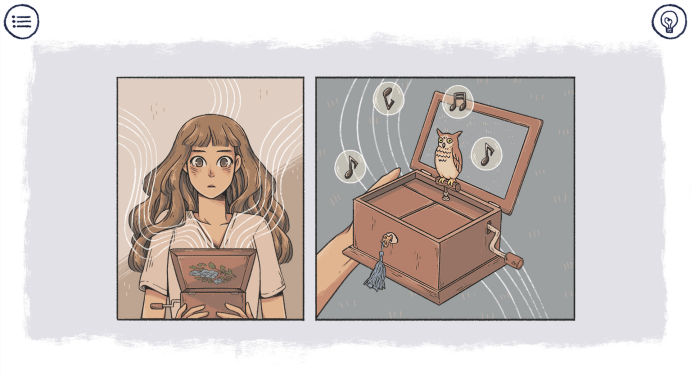
As the puzzles were solved layer by layer, I found that I was going through the same healing process. When I need to help Eda organize the suitcase, the items carrying memories remind me of my dusty past; when I ask to rearrange the broken photos, the trembling of my fingers can’t tell whether it’s the game character or my real reaction. Once when I was solving a music box puzzle, the sudden tears made the screen blurred — it turned out that there was some pain, that is, using the most gorgeous art packaging would still stab people with similar experiences.
At midnight after customs clearance, I found the storage box that I hadn’t touched for many years. The greatest achievement of this game is that it turns virtual puzzle solving into real emotional healing. If you also have unhealed scars in your heart, When The Past Was Around will give you the most poetic companionship. It will not erase the pain, but it will teach you how to turn the pain into a cherished memory. After all, the real farewell is not to forget, but to learn to move forward with love.