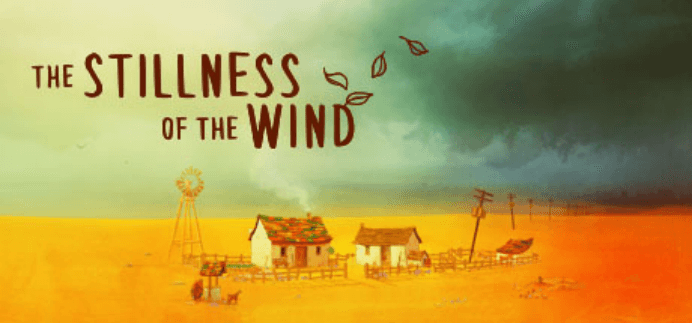
When I sprinkled the last handful of grain on the desert farm of _The Stillness of the Wind_ and watched the quails sweep through the cracked land like dead leaves, I suddenly realized that this was not only a game, but also an immersive drama about the final chapter of life. In this corner forgotten by the world, time is like fine sand in an hourglass, and each grain carries an weight of what cannot be retained.
The game opens in the dusk full of wind and sand. Talma, the old shepherd I play, is alone watching the farm that is about to be swallowed up by the desert. But what really makes this minimalist game glow with philosophical depth is its torture of “existence” itself — when the distant city is in war, when the neighbors flee one after another, and even the postman who sent the message is missing, what is the meaning of persistence?
The most shocking experience happened on a windless morning. When I was squeezing sheep’s milk, making cheese and repairing the fence as usual, I suddenly noticed that the dead leaves of the pot of geranium in the corner of the wall were trembling slightly. When I got closer, I found that it was a dying bee struggling — this trivial detail made me sit quietly in front of the screen for ten minutes. In this farm where even life and death seem ordinary, why is the end of a small life so stinging? Perhaps it is because here that every life is a warrior against nothingness.
The game is full of poetry in the presentation of “fading”. The number of letters in the mailbox was reduced from three times a week to one a month, and finally completely cut off; the goods brought by the goodsman changed from a variety to a few, and finally even he himself disappeared in the wind and sand; even Talma’s memories gradually faded like old photos — once she stared at the empty barn in a daze, saying that it had already passed away. Go to my sister’s name. These delicate settings make “loss” no longer an abstract concept, but a tangible daily life.
With the passage of seasons, the farm has become a metaphor for existence. The daily repetitive farm work seems to be monotonous, but it is actually a ritual of Talma’s game with time. When she trembled unsteadily milked the last goat, when she repaired the worn-out rocking chair in the moonlight, and when she prepared extra meals for non-existent guests, these stubborn habits became the only way for her to prove that she still existed. The most heartbreaking thing was one snowy night. Talma wrote in his diary: “No one came and no one left today. Only me and the wind are all old.”
The most profound revelation of the game lies in its questioning of “value”. When the last neighbor came to say goodbye and said, “Your persistence is meaningless”, Talma just calmly fed the pigeons: “Meaning is like rain in the desert, waiting itself is the answer.” Late at night after customs clearance, I went to the window and looked at the lights of the city, and suddenly understood this almost paranoid persistence — in an era when everything is accelerating and dying, slowness itself is the most gentle resistance.
If you also feel lost in the hustle and bustle, The Stillness of the Wind will give you the deepest comfort. It will not give you a sense of accomplishment of victory, but it will make you understand in the sound of Talma’s rocking chair that the most beautiful moments of life are often hidden in those seemingly vain times.