When I was forced to switch perspectives for the first time in the snow of _The Last of Us Part II_ and manipulate Abby to lift the golf club, the handle trembled violently in my palm. This character, which is hated by countless players, is breathing, fighting and survival through my fingers at the moment. Naughty Dog completed the boldest sympathetic experiment in the history of the game in the most cruel way.
The game opens with Joel’s death. But what really makes this revenge story go beyond the cliché is that it cuts off the courage of the player’s emotional support in the first chapter. While we were still immersed in the anger of losing Joel, the game suddenly turned the camera to the enemy Abby — her gym routine, her gentleness to stray dogs, and her bitter love with Owen. These warm fragments that seem to “not exist” are systematically disintegrating our moral judgment of black and white.
The most shocking narrative takes place in Santa Barbara. When the scarred Ellie and Abby fought to the death in the muddy sea, and their figures kept overlapping in the waves, the game suddenly flashed back to the scene of Joel’s life: he was playing the guitar on the balcony, and the moonlight illuminated his gentle eyes. At this moment, the absurdity of revenge surged like a tide — two souls swallowed up by trauma are destroying each other for the same deceased person.
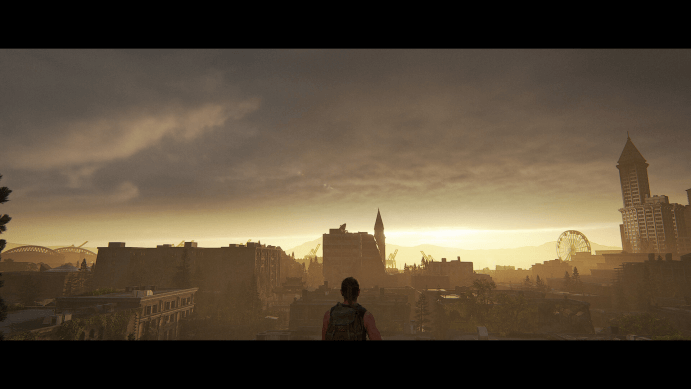
The game is full of philosophical reflection on the presentation of violence. Every kill will leave blood stains on the character’s face, and every dying gasp weakens the pleasure of revenge. When I fought with the Scars in the hospital as Abby, the WLF soldiers who were once regarded as “enemies” by us would shout each other’s names; when I played Ellie as sneaked into the snake gang stronghold and heard the patrol members talking about the dinner in their hometown, the finger that pulled the trigger began to hesitate. The delicate weaving of this moral dilemma makes violence lose the common sense of frivolity in games.
As the two-line narrative progresses, the mirror relationship between the two heroines gradually becomes clear. Ellie lost his father-like Joel in Jackson, and Abby lost his father-like Jerry in Seattle; Ellie composed music for Joel, and Abby collected coins for his father; and even they finally chose to let go with responsibility for others. When the game allows players to operate two characters at the same time to perform the same stealth action in the farm chapter, this design symmetry reaches its peak — what we have been fighting against turns out to be another version of ourselves.
Late at night after customs clearance, I stared at my reflection on the black screen. The greatest achievement of this game is not to tell a good story, but to force players to constantly question their position, emotions and moral bottom line in the 20-hour experience. If you also want to challenge your knowledge of right and wrong, _The Last of Us Part II_ will give you the heaviest mental torture. But please be prepared. True empathy is never a comfortable process, but learning to see the glimmer of human nature in hatred.