The first person who came to me was a child, not asking for money, but staring at the dry food bag around my waist.
I stood in the mountains and forests of the Warring States Period, behind me was a leaky thatched hut, and in front of me stood seven or eight men and women, old and old. They didn’t say anything, just looked at my food bag. I broke the last piece of cake and gave it to them. They took it, squatted by the stream and stuttered, licking off the crumbs that fell in the palm of their hands.
When the first room was built, everyone came. Men cut down trees, women bundle grass, and children pick up stones. On the evening when the beams were erected, we made a fire. The fire reflected their faces, and they still didn’t say much, but someone leaned back, shouldering against the shoulder of the person next to him.
Winter comes so fast. I took two men to the forest to make a trap when I saw that I was going to see the bottom. When squatting, the young man kept shivering — not because of the cold, but because of fear. He said that the village had been attacked by soldiers and bandits before, and his father died in the forest. I didn’t say anything and shared half of the pickled radish with him. On the night of trapping a thin hare, the whole village drank the first mouthful of broth since winter.
At the beginning of spring, we reclaimed a field. After sowing the seeds, the old woman went to the field early every morning. Once she found the footprints of a wild boar. She was so anxious that she patted her legs. That night, she asked her son to cut bamboo to make a fence. On the day the crop grew, she pinched a piece of young leaf and put it in her mouth to chew it. She chewed and tears came down. She said it smelled like her mother’s land.
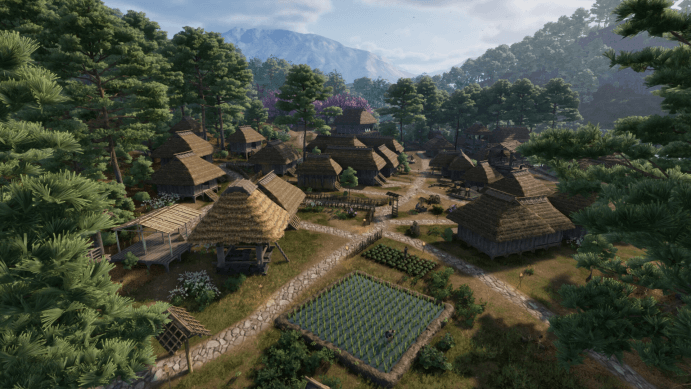
The village gradually has five thatched houses, a well, and a small vegetable patch. At night, I began to hear laughter, the sound of mothers scolding their children, and the murmurs of couples discussing tomorrow’s work. But the eyes of the ronin passing by the entrance of the village are still disturbing. I found a crippled old man who had fought in the village and asked him if he would like to teach young people how to use bamboo guns. He was silent for a long time, and the next day he dragged his legs to set up in the drying field.
When the first rain came, we had a barn to shelter from the rain. The harvested grain was piled up on the dry grass mat, and the woman calculated how many months she could eat around the rice bucket. The trembling young man is now standing guard at the door of the barn with his waist straight.
On the day of the autumn festival, the only chicken in the village was killed. There is very little meat, and each person divides half a bowl of soup. But the women picked wild flowers and planted them under the eaves, and the lame old man cut a rough statue of the god with wood. We sat around the campfire, and finally someone told a joke — a stupid joke, but everyone laughed.
Later, merchants who passed by were willing to exchange salt for our dried vegetables, and some wandering craftsmen stayed to help us repair better stoves. The village is still poor, and it is still afraid of soldiers and disasters, but the lights at night can be on for a long time.
It was early in the morning when I left. Pushing open the door of the hut, I saw the first green fruit on the persimmon tree we planted together at the entrance of the village. The villagers were drawing water by the well. When they saw me, they nodded and continued to draw water. It’s like treating a neighbor who has to go out to work.
After exiting the game, I looked at the lights between the tall buildings outside the window. I suddenly remembered that in the small village of the Warring States period, people gathered around the bonfire to calculate the grain storage. At first, all they wanted was a piece of bread, a roof that didn’t leak, and a field where wild boars did not grow. Then we need the fence, the bamboo gun, the barn, and the soup in the autumn festival that is so light that you can’t taste the meat.
And the so-called building of a home may be like this: first solve the hunger in the throat, then calm the fear in the memory, and finally, on an ordinary night, around a small fire, listen to people tell a joke that is actually not funny — and everyone is willing to laugh out loud.
I don’t know if the green fruit on the persimmon tree turned red later. But I know that in the mountains and forests of constant war, there were several thatched huts, and the lights in the houses were lit one after another. From the stomach, to the heart, and then to the eyes.