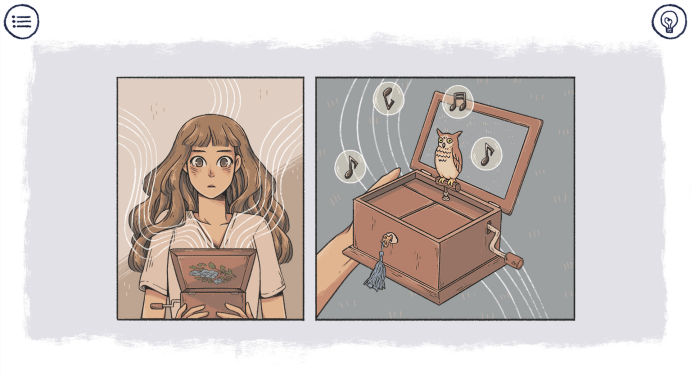
When I dragged the farmer named Hans to the wheat field, his wife turned around on the next grid and faced him.
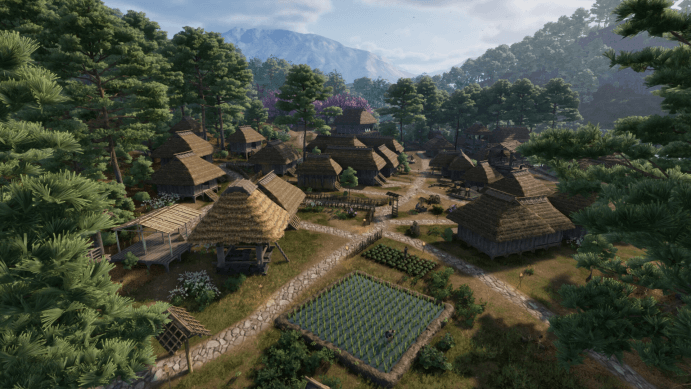
This is a chessboard that can breathe. My territory is a few green grids, and opposite is the blue grid of the enemy camp. There are small people standing on each grid — farmers holding hoes and soldiers holding spears. Hans went to the field and began to work. His wife was spinning next door, and there was an almost invisible thin thread between their grids.
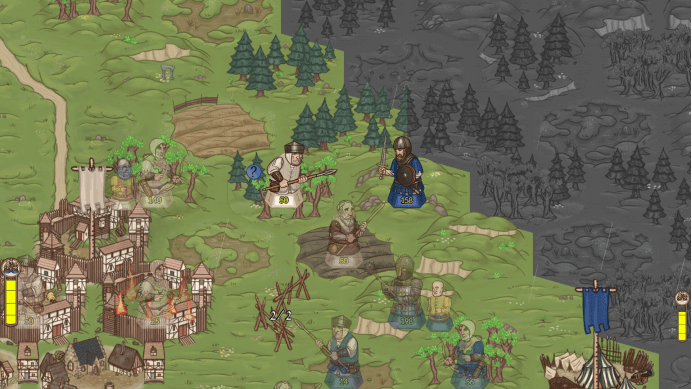
Then winter came. The snow covered the chessboard, and the green of the wheat field darkened. I saw that Hans’s movements slowed down, and he bent down once and gasped twice. A small icon appeared next to his wife’s grid: a small fire with a fork on it. I clicked it on, and it said “insufficient firewood”. It turns out that farmers not only farm, but also keep warm themselves.
I transferred a soldier to the forest to cut firewood. The soldier put down his spear and swung the axe very slowly — he was not skilled. When the firewood icon lit up, Hans’s wife’s plaid showed a small smile. But the enemy on the other side of the river moved. I had to urgently transfer the firewood-cutting soldier back to the front line. When he ran past his wife’s grid, his smiling face darkened.
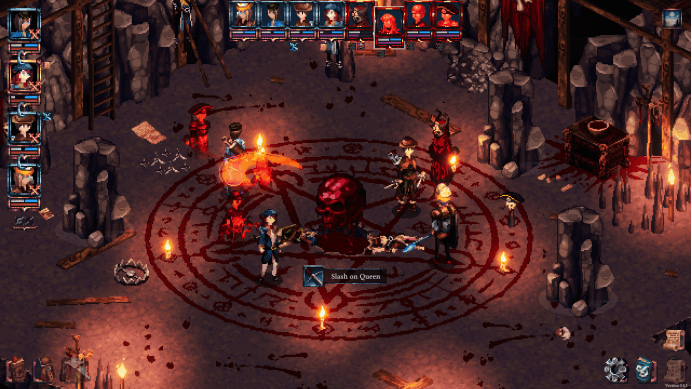
The real war broke out on an autumn afternoon. Three enemy cavalrymen rushed across the river, and the sound of horses’ hooves was like thunder in the sound effect. My two farmers are repairing houses and can’t run in time. I right-clicked on them and chose “Conscript”. Instead of becoming soldiers immediately, they put down their tools, knelt on the ground, and paused for a second with their hands on their chests — they were praying. Then he picked up the straw fork and the old sickle on the ground, and the word “new soldier” appeared above his head, and he staggered to the riverbank.
The battle was won. But my chessboard is empty with two squares. The third recruit came back with a limp. When he walked through the grid of his house, his wife came out of the room. The two villains stood quietly together and did nothing. I looked at them with my hands hanging on the mouse and forgot what to do in the next round.
I began to play chess in a different way. Before leaving troops, we will check which soldiers’ fields have not been collected yet. When training soldiers, I will deliberately leave a few young people near the village — not for fear of the enemy’s sneak attack, but because I think there should be a little laughter on the chessboard. One harvest, I asked the soldiers on the front line to take turns to come back to help, although the commander told me that it was “inefficient”. But when the wheat field is golden and a small celebration symbol emerges on the heads of all the villains in the whole territory, I think it’s worth it.
In the most difficult winter, the granary icon has been flashing red. I had to let half of the soldiers take off their armor and go back to be farmers. They walked in the snow, and their movements were more clumsy than those of real farmers. The enemy gathered on the other side of the river, and my defense line was as thin as paper. That winter, I pulled the screen to the nearest in every round to see if those villains would fall. They didn’t. It’s just walking very slowly, like moving carefully on the ice.
When spring came, the snow in my territory had meted. The surviving villains began to repair the fence, and someone sowed seeds in the field. The enemy has retreated — there are more red dots on their chessboard than mine.
At the end of the game, my territory is not big, but every grid is smoking. I pulled the picture to the nearest and watched Hans and his wife get off work in the sunset and walk back to the cottage one after and one. Thin gray lines floated out of the roof chimney.
I quit the game, and it was already dark. There are still children running in the playground downstairs, and the sound of footsteps thuds. I looked at my hands. Just now, it was these hands that decided on the screen who would go to war, who would go home for dinner, and who would survive in winter.
It turns out that rule is not to expand the territory, but to remember that every grid will be cold, hungry and afraid. When the troops were transferred, the almost invisible thin line between the husband and wife could still be seen. And the real victory may only allow all the villains to walk back safely to the lighted cottage when the sun goes down.
I won this game of chess. The way I won was — my chessboard, and I could hear the sound of breathing until the end.